


Where do Petrochemicals Exist in Our Homes?
September 3, 2026
With surging gas prices and ongoing global unrest drawing attention to our dependence on fossil fuels, now is a fitting time to look beyond the pump and consider where petroleum shows up in our daily lives. Most of us associate it with fuel or obvious plastics, but its reach extends much further. In fact, petroleum quietly permeates many of the materials and finishes used in modern homes, often in ways that are easy to overlook. If you have ever walked into a newly built or renovated home and noticed that “new house smell,” you’ve already experienced one of petroleum’s more subtle signatures.
So Where Do Petrochemicals Show Up?
Most conventional paints, particularly oil-based varieties, depend heavily on petroleum-derived solvents and binders. Even latex paints, while water-based, often include petrochemical ingredients that enhance durability, adhesion, and overall finish. Wood finishes like clear coats, varnishes, and sealants are similarly tied to fossil fuel chemistry. These products create the smooth, glossy surfaces seen on cabinets and floors, but their composition is largely petroleum-based.
Carpeting is another major, often overlooked, user of petroleum. Common fibers such as nylon, polyester, and polypropylene are all synthetic materials derived from petrochemicals. In many cases, the nylon backing and foam padding beneath them also rely on petroleum-based foams and adhesives as well. Jute was commonly used in the carpet industry before the introduction of synthetic backings that are currently employed. Also, the face fibers are adhered to the backing using vinyl or styrene butadiene adhesive in most cases. Some natural carpets, such as EarthWeave, use a natural adhesive that is derived from the rubber tree instead.

Vinyl flooring offers a more obvious example, though its impact is sometimes underestimated. Despite its versatility and widespread use, vinyl (PVC, poly vinyl chloride) is fundamentally a plastic made from petroleum combined with chlorine. The production of PVC is also associated with highly toxic chemicals and byproducts, particularly during manufacturing and disposal, raising significant environmental and health concerns across its lifecycle.
Part of what drives the widespread use of these materials is our preference for products that are highly durable, low-maintenance, and resistant to wear. “Easy to care for” and nearly indestructible surfaces often achieve those qualities through intensive chemical engineering, much of it rooted in fossil fuels. That convenience, while appealing, comes with trade-offs in terms of resource use, environmental impact, and long-term sustainability. Luckily there are many alternatives to these interior finishes that are comparable in performance and application such as Marmoleum natural linoleum flooring and Amorim WISE flooring instead of LVP. Or if you are looking to coat your walls in a paint not made from plastic, there are mineral paints that go on just as easily and pass the “ketchup and mustard” cleaning test.

Adhesives and Sealants: The Invisible Glue
Binders and adhesives are used throughout the home in ways that are easy to overlook, yet they play a foundational role in how buildings are constructed and finished. From sub-flooring and tile installation to cabinetry and trim work, most modern adhesives are formulated with synthetic resins derived from petroleum. Caulks and sealants used around windows, doors, bathtubs, and plumbing fixtures rely on similar petrochemical compounds to stay flexible, waterproof, and long-lasting over time. Though rarely visible once a project is complete, these materials are what literally hold much of the built environment together. A natural alternative is Oakum, which is loosely twisted jute used for caulking, sealing and packing in a variety of industries. Prior to conventional caulking oakum was widely used for filling all sorts of voids, and joints in construction, shipbuilding, and even for horse hoof packing. It’s still used in all of these industries because it creates a flexible gasket between unlike materials, and is a breathable sealant.
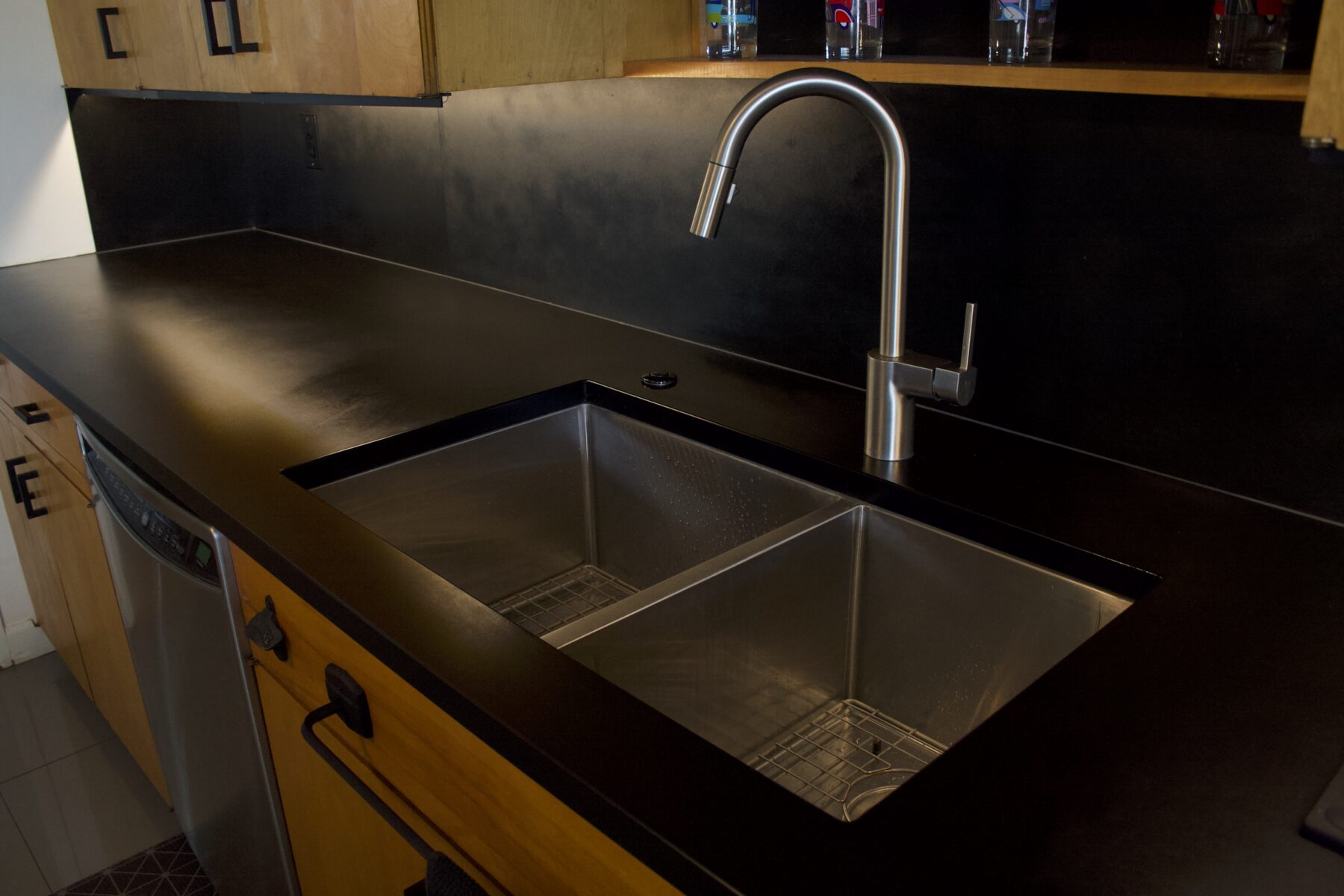
This same pattern continues in manufactured surfaces and finishes. Engineered countertops, such as solid surface materials and certain quartz composites, often depend on petroleum-based resins to bind minerals and fillers into a durable slab. While the stone or aggregate content tends to get the attention, it is the synthetic binding agents that give the material its structure and performance.
There’s no denying the appeal: these products are convenient, widely available, and often more affordable, and they’ve made modern construction faster. At the same time, there are healthier and lower-toxicity options available. Newer bio-based adhesives, resins, and sealants, that reduce reliance on petrochemicals while still offering strong performance, especially when designed with longevity and proper application in mind.
Why It Matters
The widespread reliance on petroleum-based materials in our homes underscores a growing challenge for the future. While these products offer convenience and performance, their full lifecycle, from extraction and refining to transportation and installation, comes with significant environmental and human costs. Oil and gas production can expose workers and nearby communities to safety risks and pollution, while the shipping of these materials increases the chances of spills and long-distance emissions. The carbon footprint tied to manufacturing and using petrochemical products contributes to climate change on a global scale. Reducing our dependence on these materials, even in small ways, can help lower these impacts and support a more sustainable, resilient approach to building and living.
Understanding where petroleum shows up in our homes isn’t about creating an alarm, it’s about awareness. These materials are widely used because they’re cost-effective, durable, and versatile. But they also come with environmental and health considerations, especially in terms of indoor air quality and long-term sustainability.
For homeowners and builders interested in reducing petroleum use, alternatives do exist: natural fiber carpets, plant-based finishes, mineral-based paints, and wood, cork, and natural linoleum flooring, to name a few. The next time you step into a home, it’s worth considering not just how it looks, but what it’s made of. Beneath the surface, there is a complex web of materials that tell a much bigger story.