
Lime Plaster
Lime plaster is one of the oldest known wall finishes, with a history spanning thousands of years. It has been used in everything from the Egyptian pyramids to ancient Roman architecture, thanks to its durability, versatility, and natural beauty. Made from slaked lime (calcium hydroxide), water, and aggregates such as sand or marble dust, lime plaster creates a breathable and long-lasting surface. It is suitable for both interior and exterior applications.
One of the key distinctions of lime lies in the variety of textures and finishes it can achieve. Depending on the aggregate size and application technique, it can produce surfaces ranging from ultra-smooth and polished to more textured and rustic. Some lime plasters are finely ground for a sleek, low- to high-sheen finish. Others are blended for a matte appearance or a gently polished effect. Traditional techniques such as tadelakt—a Moroccan method that results in a waterproof, burnished surface—can also be adapted using lime plaster. This creates a decorative, natural look suitable for wet areas like bathrooms.
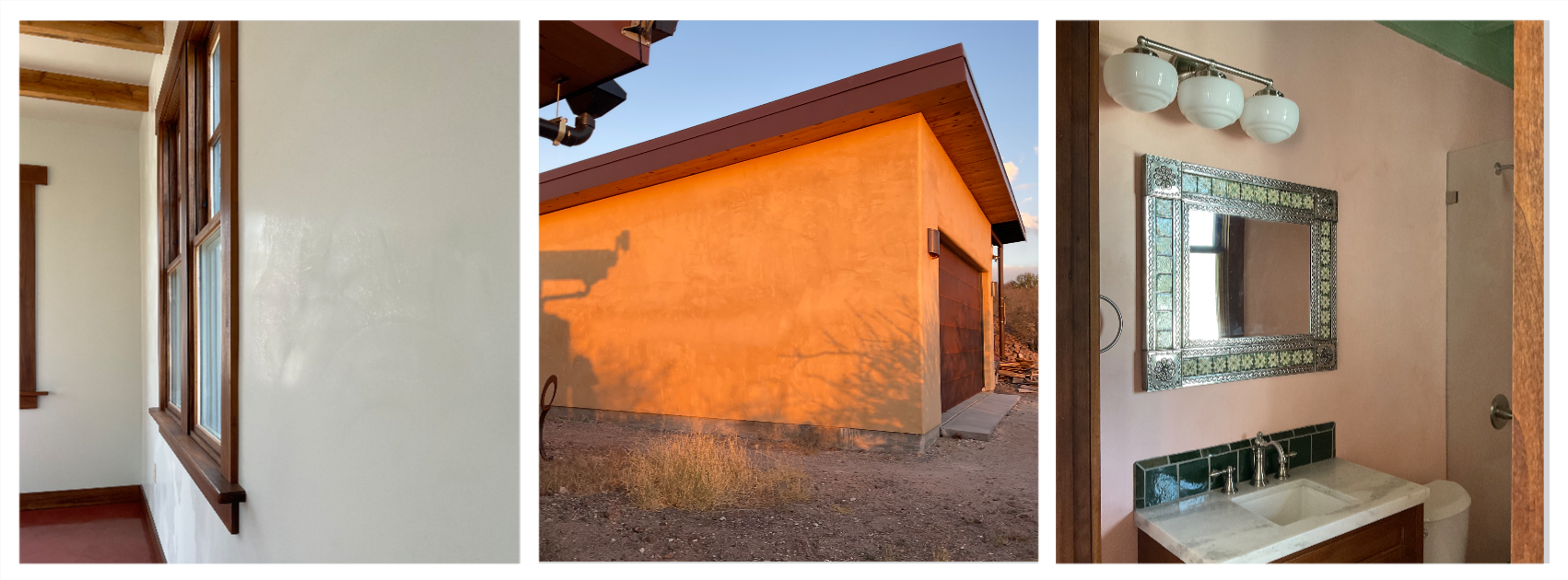
From left to right: Color Atelier Smooth Finish in Bone, NHL Lime Plaster in a custom color, Color Atelier Tadelakt Waterproof plaster in Rose
There are also different types of lime used in plaster, notably natural hydraulic lime (NHL). Natural hydraulic lime comes in grades such as NHL 2, 3.5, and 5, and sets through a reaction with water. These grades indicate the strength and setting speed. NHL 2 is the most flexible and suitable for delicate applications. NHL 5 is the strongest and most appropriate for demanding environments like basements or exterior walls exposed to harsh weather.
Beyond its aesthetic versatility, lime offers several practical benefits. It is hygroscopic, meaning it can absorb and release moisture. This helps regulate indoor humidity and reduces the risk of mold or mildew. Unlike cement-based products, lime remains slightly flexible, making it more resistant to cracking over time. It also develops a patina as it ages, adding to its character rather than showing wear. Environmentally, it is more sustainable than many modern alternatives. Lime can reabsorb some of the carbon dioxide released during production through its curing process.
Although it requires more skill and time to apply than some contemporary materials, lime plaster rewards that effort with longevity, beauty, and environmental performance that few finishes can match.
Read our Deep Dive about Lime Plaster to find out more.